
Introduction
A screw conveyor plays an important role in moving bulk materials across industrial plants. However, small operational issues can develop into costly maintenance problems if operators ignore the early warning signs.
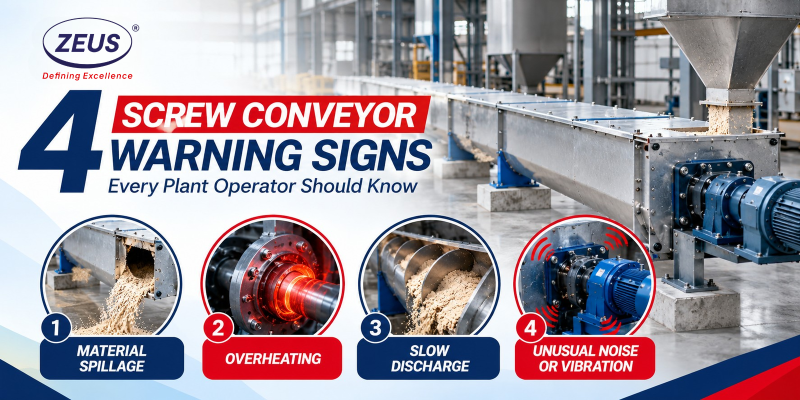
Screw conveyor warning signs such as material spillage, overheating, slow discharge and unusual noise can indicate that a component needs inspection. Recognizing these symptoms early helps maintenance teams investigate potential problems and reduce the risk of unexpected downtime.
In this guide, we explain four common screw conveyor warning signs, their possible causes and the inspection steps that maintenance teams can consider.
4 Common Screw Conveyor Warning Signs
1. Material Spillage Around the Conveyor
Material spillage around a screw conveyor can indicate problems with seals, joints, casing or connections. It may also occur when material accumulates near an inlet or discharge point.
If material repeatedly leaks from the same area, operators should investigate the source instead of only cleaning the surrounding floor.
What Should You Check?
- Inspect casing joints and connections for visible leakage.
- Check seals for signs of wear or damage.
- Look for material buildup near the inlet and discharge points.
- Check accessible casing sections for visible damage.
- Confirm that connections remain secure according to the manufacturer’s instructions.
Maintenance tip: Identify the source of the spillage before carrying out repairs. Follow the site’s safety procedures and isolate the equipment as required before inspection or maintenance.
2. Overheating During Operation
Excessive heat around a screw conveyor’s bearings, motor or gearbox can indicate an operating or mechanical problem. Possible causes include lubrication issues, excessive loading, misalignment or increased mechanical resistance.
Therefore, operators should compare observed temperatures with the equipment manufacturer’s specified operating limits rather than relying only on touch or visual checks.
What Should You Check?
- Monitor bearing, motor and gearbox temperatures.
- Check lubrication levels and follow the recommended lubrication schedule.
- Review the conveyor’s loading and operating conditions.
- Investigate signs of misalignment or unusual mechanical resistance.
- Check for recurring temperature increases during operation.
Maintenance tip: If temperatures exceed permitted limits, follow site procedures to stop the equipment and investigate the cause before restarting it.
3. Slow Material Discharge
A screw conveyor should move material at a rate that matches its design and operating requirements. When discharge becomes slower than normal, material buildup, a restricted outlet, inconsistent feeding or a drive-related issue may be responsible.
As a result, production teams may experience delays in material transfer and interruptions in downstream processes.
What Should You Check?
- Inspect the inlet and discharge areas for blockages.
- Check accessible sections for material buildup.
- Compare actual material flow with the expected operating rate.
- Review feeding conditions and material characteristics.
- Inspect the drive system if the problem continues.
Maintenance tip: Record when the discharge rate changes and whether the problem occurs continuously or only under certain operating conditions. Investigate recurring restrictions instead of repeatedly clearing blockages without identifying their cause.
4. Unusual Noise or Vibration
A change in operating sound or vibration can provide an early indication of a mechanical issue. Worn bearings, loose supports, alignment problems or interference involving the screw assembly may contribute to unusual noise.
However, sound alone cannot confirm the exact cause. Maintenance teams should consider the equipment’s operating history and inspect the relevant components.
What Should You Check?
- Listen for new grinding, knocking or rattling sounds.
- Inspect accessible supports and fasteners for looseness.
- Check bearings and drive components according to maintenance procedures.
- Look for visible signs of wear or contact in accessible areas.
- Record when the noise occurs and whether it changes with the operating load.
Maintenance tip: Investigate new or increasing noise and vibration promptly. If the condition presents a safety risk or becomes severe, follow site procedures to stop the equipment and arrange a safe inspection.
Screw Conveyor Troubleshooting Checklist
Use this checklist to help maintenance teams record visible symptoms and decide which areas need further investigation.
| Warning Sign | Possible Area to Inspect | Recommended Action |
|---|---|---|
| Material Spillage | Seals, joints, casing and connections | Locate the leak and assess damaged parts |
| Overheating | Bearings, lubrication, motor and gearbox | Check temperatures against operating limits |
| Slow Discharge | Inlet, outlet, material buildup and drive | Compare actual and expected material flow |
| Unusual Noise or Vibration | Bearings, supports, drive and screw assembly | Investigate the change before continued operation |
Important: These are general troubleshooting guidelines, not a definitive diagnosis. Actual causes vary according to conveyor design, material properties and operating conditions. Always follow the equipment manufacturer’s instructions and your site’s safety procedures.
How Regular Screw Conveyor Maintenance Helps
A consistent maintenance routine helps teams identify changes in equipment performance and plan inspections more effectively. Moreover, maintenance records can help reveal recurring issues before they cause larger operational disruptions.
For better equipment monitoring, maintenance teams should:
- Schedule inspections according to manufacturer recommendations and operating conditions.
- Record unusual sounds, temperature changes and discharge variations.
- Check lubrication and wear components at recommended intervals.
- Keep the surrounding area clean and monitor recurring material spillage.
- Investigate repeated problems instead of treating only visible symptoms.
- Follow appropriate lockout and isolation procedures before maintenance work.
In practice, these steps help maintenance teams make informed decisions about inspection, repair and component replacement.
Choosing the Right Screw Conveyor for Your Application
Selecting a suitable screw conveyor requires an understanding of the material being handled and the conditions in which the equipment will operate.
Before choosing a system, consider:
- Material characteristics: Understand the material’s properties and flow behaviour.
- Required capacity: Establish the quantity of material the process needs to move.
- Installation layout: Consider the available space and connection points.
- Operating conditions: Review the expected operating schedule and plant environment.
- Maintenance access: Allow appropriate access for inspection and servicing.
Therefore, industrial buyers should evaluate application requirements before finalizing a conveyor configuration.
Zeus Engitech manufactures material handling and processing systems for industrial applications. Explore the Screw Conveyor to learn more about the company’s offering.
Conclusion
Material spillage, overheating, slow discharge and unusual noise are four screw conveyor warning signs that plant operators should never ignore. Although each symptom can have several possible causes, timely inspection helps maintenance teams investigate problems before they become more disruptive.
By monitoring equipment performance, following maintenance procedures and investigating recurring symptoms, plants can make better-informed maintenance decisions.
Notice a change in your screw conveyor’s performance? Record the symptoms, follow the appropriate safety procedures and arrange an inspection to identify the underlying cause.
Frequently Asked Questions
1. What are the common screw conveyor warning signs?
Four common warning signs are material spillage, overheating, slow material discharge and unusual noise or vibration.
2. Why does a screw conveyor spill material?
Spillage may result from damaged seals, loose connections, casing problems or material buildup near the inlet and discharge points. Inspect the affected area to identify the cause.
3. What causes a screw conveyor to overheat?
Possible causes include lubrication problems, excessive loading, misalignment or increased mechanical resistance. A proper inspection is necessary to identify the actual cause.
4. Why is my screw conveyor discharging material slowly?
Slow discharge may indicate a blockage, material buildup, inconsistent feeding or a drive-related issue. Compare actual flow with normal operating performance and investigate recurring changes.
5. What causes unusual noise in a screw conveyor?
Unusual noise may result from worn bearings, loose supports, alignment issues or interference involving the screw assembly. The exact cause requires inspection.
6. How often should a screw conveyor be inspected?
Follow the manufacturer’s maintenance schedule and consider the conveyor’s operating conditions. Inspect the equipment promptly whenever operators notice unusual temperatures, sounds, vibration, spillage or changes in material flow.
7. Where can I enquire about a screw conveyor for an industrial application?
You can contact Zeus Engitech at +91 96870 31234, email info@zeusengitech.com, or submit your requirements through the Request a Quote page.